Saturday, March 5, 2011

E-Book Blowout Madness One Week Only!

Do you think Darwin was more of a Kindle or an iPad kinda guy?
Read an E-Book Week on Smashwords.com

It's that time again - basketball playoffs, baseball spring training, LA book fair anticipation, and best of all, the greatest annual electronic clearance sale while digital supplies last - Read an E-Book Week on Smashwords.com.

Just follow these links and enter coupon code RE100 to get free (while they last and our accountants don't find out) e-books in your choice of format, including HTML, LRF, EPUB, and others:

My Inflatable Friend: The Confessions of Rollo Hemphill

Rubber Babes: Further Misadventures of Rollo Hemphill

This streaming, screaming extravaganza runs one week only - from March 6 to 12 (or until the last electron is out the door!).

Sunday, February 20, 2011

Opera Review: The Turk in Italy at LA Opera


Okay, boychiks. What would you do if you were married to her? And imagine that you're overweight and almost twice her age.


Your name is Don Geronio, and you are coping with the challenges of your May-September marriage when a dark male stranger floats into town on a flying carpet...more

Photo by Robert Millard courtesy LA Opera

Thursday, January 20, 2011

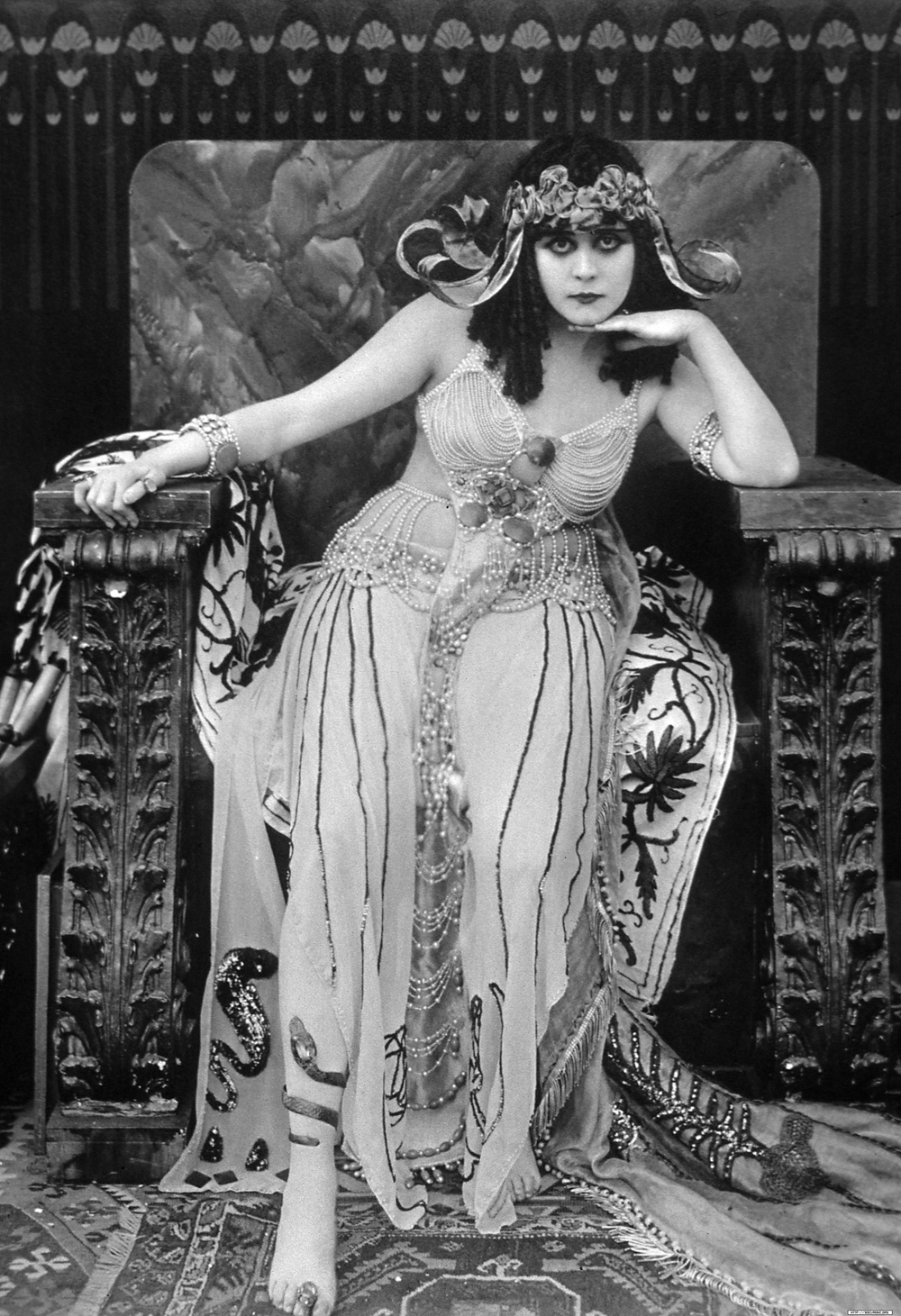
Book Review: Cleopatra

The subject of my boychiklit.com blog is the unfortunate life choices made by young men who have more chutzpah than brains. Tyros, if you will. But it seems to me legitimate, if not downright inclusive, to also muse about young women who likewise show brashness, lack of respect for authority, and the propensity to occasionally throw up on their own shoes (c.f., Tucker Max et al).

I was drawn to Stacy Schiff's new biography of Cleopatra not only because I saw her (the author, that is) on Jon Stewart's show, but also because I've devoted considerable study to another Greek-speaking ancient Egyptian babe, Hypatia of Alexandria. (As with most women, ancient here is a highly relative term, unless you're blood relative and you know for sure. Hypatia was almost 500 years younger than Cleo - being a young adult in 415 A.D. versus 45 B.C. - but I calculate about 1,363 years older than me, and I leave it to the brighter boychiks to do that math.)

About the book I would say it's an engaging account and a worthy contribution to the topic. Schiff admitted (on camera to Jon, as I can attest) that not much is known about this last of the pharaohs. As a result, this book is mostly conjecture - scholarly and informed conjecture - but speculation nonetheless. Imagine you are reading a rather well-written history text, clicking along about tenth-grade reading level, and every sentence begins (or could begin) with "She would have..." or "It is likely that..." That is, Schiff argues mostly from circumstantial evidence and logic.

Her opinions are therefore not necesarily more factual than anyone else's, except when a bona fide scholar expresses an opinion, we tend to give it more weight than amateur conjectures like mine. Especially when a lot of people these days who are struggling to read at tenth grade level could not identify Cleopatra's role in history unless they recall seeing the oft-derided Fox epic on Turner. Schiff points out that we don't even know what Cleo looked like, except for some profiles on ancient coins. The author astutely points out that those likenesses would have been subject to royal approval, and therefore are probably pretty good. Unfortunately for the sake of Cleo's reputation, they are not all that pretty.

To paraphrase Schiff's conclusion, "She would have had a helluva mind." Plus, of course, political power, the world's largest personal fortune (far surpassing anything in Rome), and -- let's take a wild guess -- a helluva body and some hard-earned skills.

Schiff's arguments point out the varying political biases of historians such as Herodotus, Dio, and Josephus. After all, that's most of the written evidence we have. From a scholarly standpoint, hers is a significant contribution simply because of that dose of objectivity.

But life is not all that logical at times, and although Schiff takes emotions and even passions into account, arguing what Hitchcock called the "plausibles" could easily get things wrong. Life doesn't always make perfect sense. Read our recent history, about which we have more information than anyone could digest, and then ask yourself how you'd explain its seeming lack of logical progression to some (hopefully benign) intelligent space alien.

With all its focus on the pharaoh, this book called Cleopatra is mostly about Julius Caesar and Marc Antony, and Schiff seems genuinely in awe of both. Perhaps rightly so, but you wonder which of the three she'd rather have dinner with.

My favorite parts of Cleopatra are Schiff's descriptions of the royal barges (imagine something almost the size of a Royal Caribbean being paddled around by a thousand slaves, enclosing a theater, a gym, a banquet hall, plus the royal suite and staff quarters). Then there are the luxurious decorations and feast days in the city of Alexandria. Romans - yes, the Romans - thought the Alexandrians celebrated to excess!

And my favorite of her many observations: Since Cleopatra was descended from Macedonian Greeks (generals in Alexander the Great's army), she was "about as Egyptian as Elizabeth Taylor."

This was the first book I read on Kindle. Get two Kindles. One for yourself and one for your wife or girlfriend. Because if you don't she will borrow it and you will never see it again! If you live under the same roof, maybe only one needs to have 3G. Make it yours!

Sunday, December 19, 2010

Discount Coupon Codes for Last-Minute Ebook Gifting

From now until mid-January, go to Smashwords.com and use the codes below to get three bucks credit toward one of Rollo Hemphill's zany adventures. That's $3.99 a copy for a gift that says, despite everything that's happened, you still have a "unique" sense of humor. These little books are about an airplane-read long, and you can read a chapter while you take a coffee break, wait your turn at the dentist (!), or would otherwise fret because your food order is still in the kitchen.

Smashwords links:

My Inflatable Friend code BY75K

Rubber Babes code AS78F

Many ebook formats available, including B&N Nook and Apple (EPUB), Sony (LRF), Palm (PDB), HTML, and several online formats you can simply read on a computer, SmartPhone, or tablet.

Kindle format is available on Amazon, but I don't control that price. Available here.

Same with Diesel PDF available here.

So if you're not yet a fan of Rollo or simply want to spread the itch, here's an inexpensive gift that says you care enough to mess with his mind.

Enjoy your holiday and why don't you stop back after your shopping's done to post on the blog?

P.S. Paperback editions also available on Amazon (ads below) if you're hopelessly stuck in the 20th century and still have some bookshelf space left.

 Paperback  edition
 Paperback edition

Sunday, October 31, 2010

Book Review: Our Kind of Traitor

The master breaks all the rules. Main character Perry is not a spy but a wannabe patriot, an amateur screw-up with a good heart. Contrary to conventional story-structure rules, he is not the driver of the plot and he is absent for big chunks of the narrative. At those times, pro spy Luke steps in, but he doesn't drive the story either. Perry and his lawyer girlfriend Gail are mirrored by Luke and his spook sidekick Yvonne, but even as a group they are not a main character. (At best, Perry is a sympathetic character because he mirrors the reader in his fascination with the undercover world.)


Master-spy, case-officer Hector holds the strings, but he is never in control, a dismal fact of geopolitical reality that becomes increasingly obvious as the plot devolves. (Almost) everyone is trying to protect wannabe defector Dima, king of the Russian mob's money launderers (think Otto Preminger). Dima is the biggest personality on the stage, and ultimately the only one who is unabashedly brave.

The author holds true to his oft-used theme that personal betrayal is the ultimate sin, which the career spy can't help but do and for which he deserves to die.

(Sigh) The master breaks all the rules and still hits it out of the park. The Hollywood script consultants-for-hire will say don't try this at home.

(Photo credit: Bain News Service)

Monday, July 12, 2010

Book Review: For the King by Catherine Delors

All historical fiction is about today. That goes for works old and new. The old works are being experienced by contemporary readers, and the material filters through a modern mindset. Conversely, and  more to the point here, a contemporary work such as For the King by Catherine Delors was conceived in her unarguably modern mind. (Ignore the fact that this charming author is so steeped in French history she can blog about little else.) The modern writer's preoccupations and prejudices seep through. Yes, it is possible to imitate the writing style, the attitude, the point of view of a Balzac or a Stendhal (who both lived around the time of this story). But it is not possible, nor would it be desirable, for the writer to somehow unhook her intimate connections to the collective unconscious of the present day.


Delors' second novel is about a plot to assassinate Napoleon Bonaparte on Christmas Eve, 1800. But in many ways it is very much about today. For one thing, its narrative structure is as familiar as a network TV series — it's a police procedural. (How about CSI: Île de la Cité?)

The reader knows who the perpetrators are from the start — so it's not a whodunnit. Most of the story is about how chief investigator Roch Miquel discovers for himself who they are and how he tracks them down. Herein lies another influence of contemporary genre fiction. In the film noir detective story, the main character's inquiry leads him progressively deeper into the corruption that pervades the big city. And in the most intensely psychological (and arguably the best) of those stories, the detective eventually discovers that he's been betrayed by "the girl" and — in the most chilling variants — he finds out to his everlasting regret that he is personally somewhat to blame for the crime itself.

I won't stretch this parallel further for fear of spilling spoilers. Roch is modern in another important sense — politically and morally he is a citizen of today's EU. His sympathies lie with the Revolution, with the same idealistic egalitarianism that shaped the American Constitution. Roch's father is a sheep herder turned tavern owner, a self-made entrepreneur, a small-business capitalist. The heavies of the story, Miquel's adversaries, are reactionary royalists (called Chouans). Although some of them profess admiration for the deposed king (who is nowhere to be found in the book), the majority of them simply hanker for their lost swaggering privileges and aristo status. They resent the new centralized government control Bonaparte is imposing on every aspect of their lives.

And then there's the practice of torturing witnesses and suspects, as problematic an interrogation technique then as it is now. Delors can't help editorializing: "Roch reported [the torture] to the Prefect, who had dismissed his concerns on the grounds that the search for information of vital importance to the safety of the Nation justified such means. Roch disagreed. Most of what could be obtained in this manner was false confessions or information that reflected what the suspect thought [the torturer] wanted to hear. Roch had argued in vain that a skillful interrogator could obtain better information without disgracing himself and the entire police."

The most compelling aspect of this story is psychological and emotional and has only the barest relationship to the facts of the criminal investigation. For reasons hinted at above, Roch the man must reexamine how he regards and treats women. He must challenge his notions of trust in and loyalty to mistresses, ladies, beggars, prostitutes, and — the girl next door.

So, as you might expect from his appearance here, tyro Roch Miquel fits the essential definition of the boychik  — a young man who has a lot to learn, especially about women.

The French have a saying: As much as things change, they remain the same.

Monday, June 7, 2010

Book Review: The Man Who Would Not Die


My friend and colleague Tom Page wrote The Man Who Would Not Die - twice. No, I'm not referring to the multitude of drafts, experimental and otherwise, that any writer generates when producing a book. Back in 1981, Tom first wrote, and then Seaview Books published, what has now become a cult sci-fi classic about a handsome rake on inconveniently non-terminal life support. Then came a Signet edition, then one from Hamlyn.

Fast forward through intevening years, when predicably but unaccountably, the movie almost got made several times (it's still trying to climb out of the Hollywood ooze).

Then came a phenomenon that sounds a like a writer's fantasy - well into the twenty-first century, a mainstream publisher decided to resurrect the works of the venerable Thomas Page. First with The Hephaestus Plague, and now with The Man Who Would Not Die, the virtuous, fan-centric Trashface Books of Dublin, Ireland has come out with high-quality trade paper editions of these creepy cult faves.

Which brings us to the second writing. As Tom discussed the new release with Trashface (which itself sounds like the name of some misunderstood Marvel hero), he resolved to "freshen" it. After all, a futurist novel set in the early 1980s might not seem so bleeding-edge without a few zombie-pancake touch-ups.

So the rejuvenated book is replete with cell phones, laptops, slick interactive displays, microciruitry, nanotechnology, and genetic engineering. None of this was absolutely necessary to keep this sci-fi story alive - but it keeps it from smelling old. Without this infusion of new blood, a new generation of iPad readers might think the technology of thirty years ago quaint, if not downright odd.

As he did in The Hephaestus Plague, Tom spins a central metaphor that goes to the heart of social pathology. With the bugs that spewed fire, he concocted a race of beings better equipped than humans to survive the end times on a resource-depleted planet. With the Stendahl Holmes Life Support (LS) capsule, he's mocking a healthcare system that goes to heroic lengths to prolong life, with less regard for the quality of the result than for the seeming miracle of the achievement.

Congratulations to Tom Page on yet more proof of his literary agelessness. He's a bit of a contrarian, too. Why else would protagonist Kate make sure she had plenty of film for her camera?